When you can’t say it, play it
Client: Ad Council
Role: Lead Designer
Contribution: Concepting, UX & UI Design, Interactive Design, Prototyping, Art Direction
Black and Hispanic teens are an often overlooked part of today’s U.S. youth mental health crisis. "When You Can’t Say It, Play It," is a bilingual interactive experience leveraging music to normalize mental health discussions. Instead of asking teens to verbalize emotions, I leverage an existing behavior — music sharing — as an emotional proxy.
The campaign successfully helped caregivers and their teens see a behavior they’re already in the habit of in an entirely new way.
Recognitions
Webby Awards 2024
Winner | People's Voice Winner - Apps & Software, Experimental & Innovation
Official Nominee | Websites & Mobile Sites - Health & Wellness
Shortlisted | 3 categories
SXSW Innovation Awards 2024
Finalist | Audio Experience
Shortlist | Health & Biotech
One Show 2024
Shortlist | 9 categories
NY Festival of Advertising
Shortlist | Avant-garde/innovation, Audio/Radio Product & Services
Shorty Impact Award 2023
Winner | Mental Health
Ad of the Week
Recognized as “Ad of the week” from Shots, a prestigious advertising industry trade publication
Creative Strategy
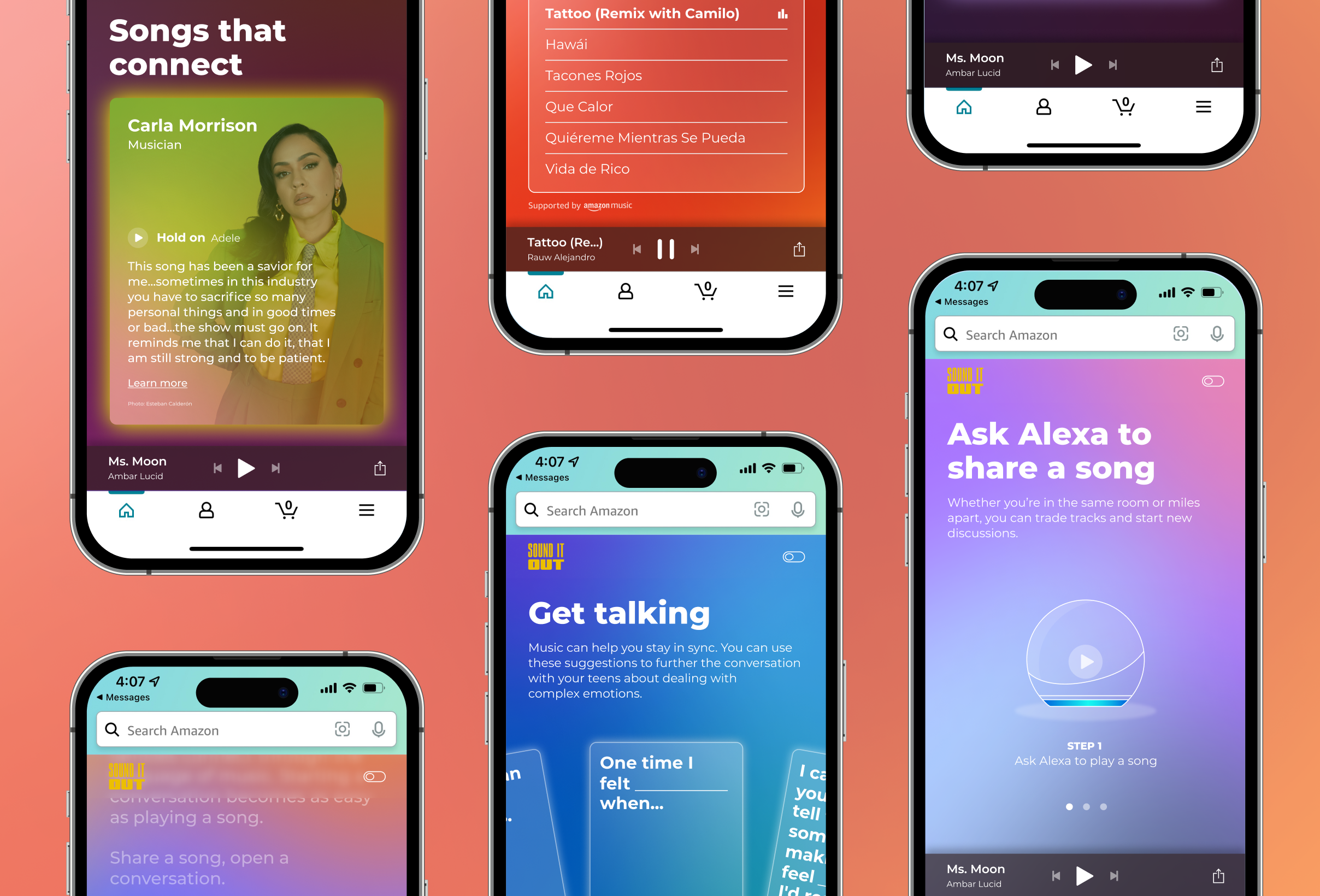
To address the communication gap between teens and caregivers around mental health, I reframed music as a bridge for emotional expression. Leveraging Amazon Music’s 100M-track catalogue and Alexa’s voice technology, the platform enabled caregivers to discover, personalize, and share songs that matched specific emotions. The result is a culturally relevant, intuitive, and participatory experience that turned listening into meaningful connection.

Color Psychology
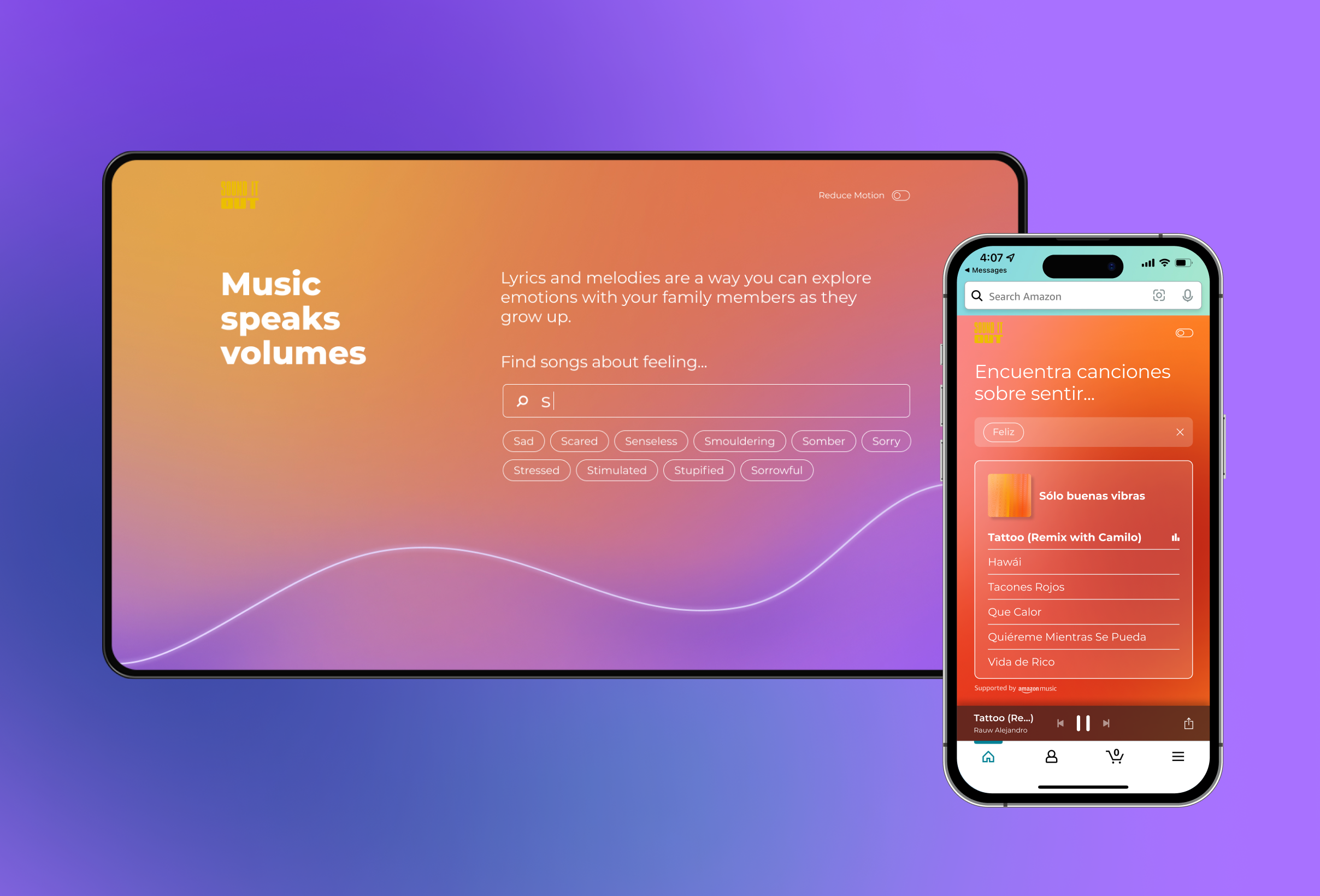
Feelings, especially for teenagers, are complex because they arise from a multitude of interconnected factors, including biological, psychological, and social influences. Just as emotions blend seamlessly into one another, forming new and nuanced feelings, gradient serves as a reflection of this intricate emotional landscape. My approach began with assigning colors to seven primary emotions, which then evolved into a rich palette of 35 hues, each varying in intensity. Through the limitless combinations, these colors create a visually compelling experience that mirror the depth and complexity of human emotions.
Real Life Activation at Cannes Lions
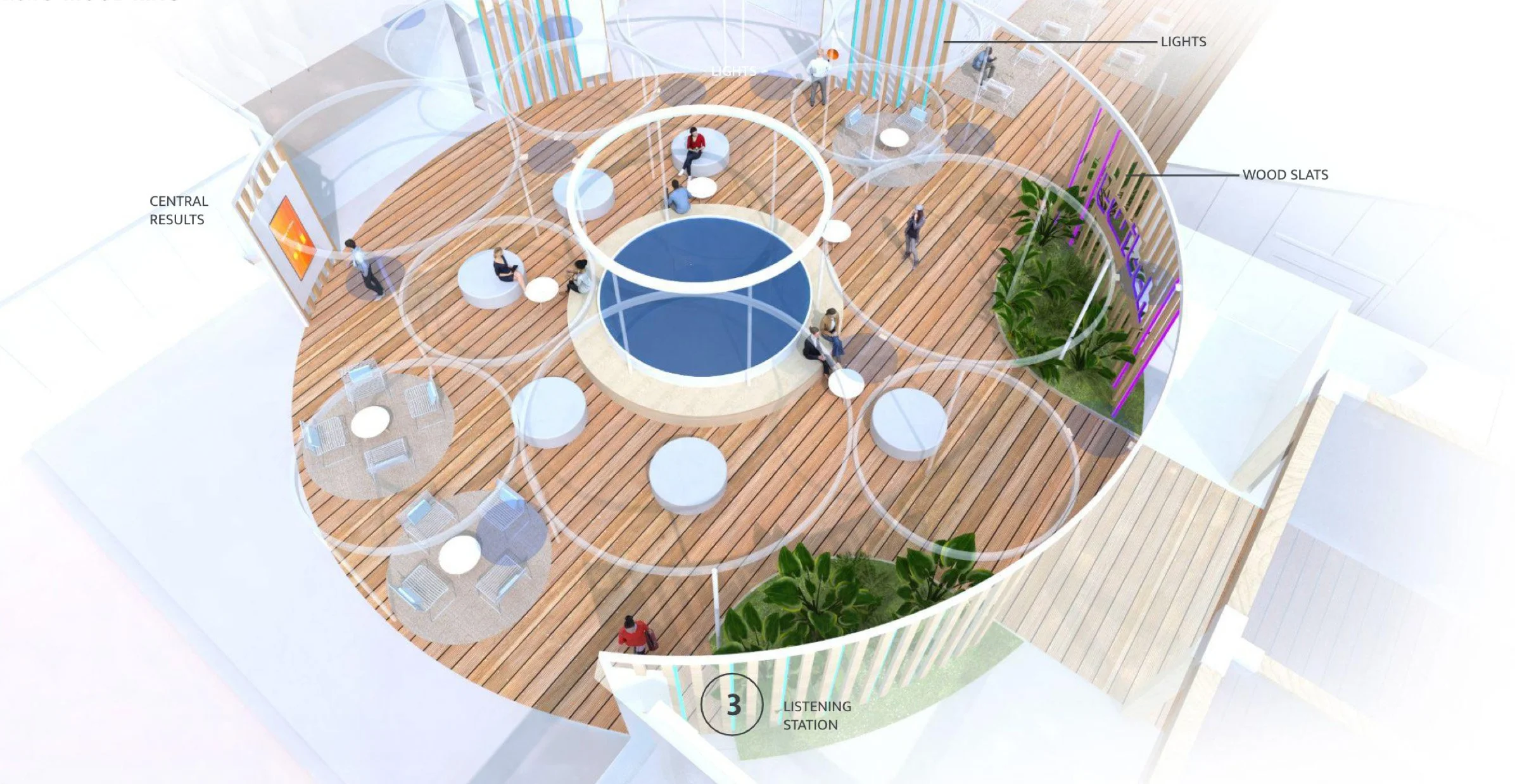
At the Cannes Lions International Festival of Creativity, we transformed the Amazon Port into a living “mood ring.” Visitors are invited into sound stations that generate playlists based on their emotions, while lights across the space changed in real time to reflect each mood. A central screen guided the experience, and when in “rest mode”, the entire space shifted to display the collective “mood of the day,” turning individual expression into a shared, immersive experience.